How to solve Kanoodle puzzles: 8 strategies that actually work
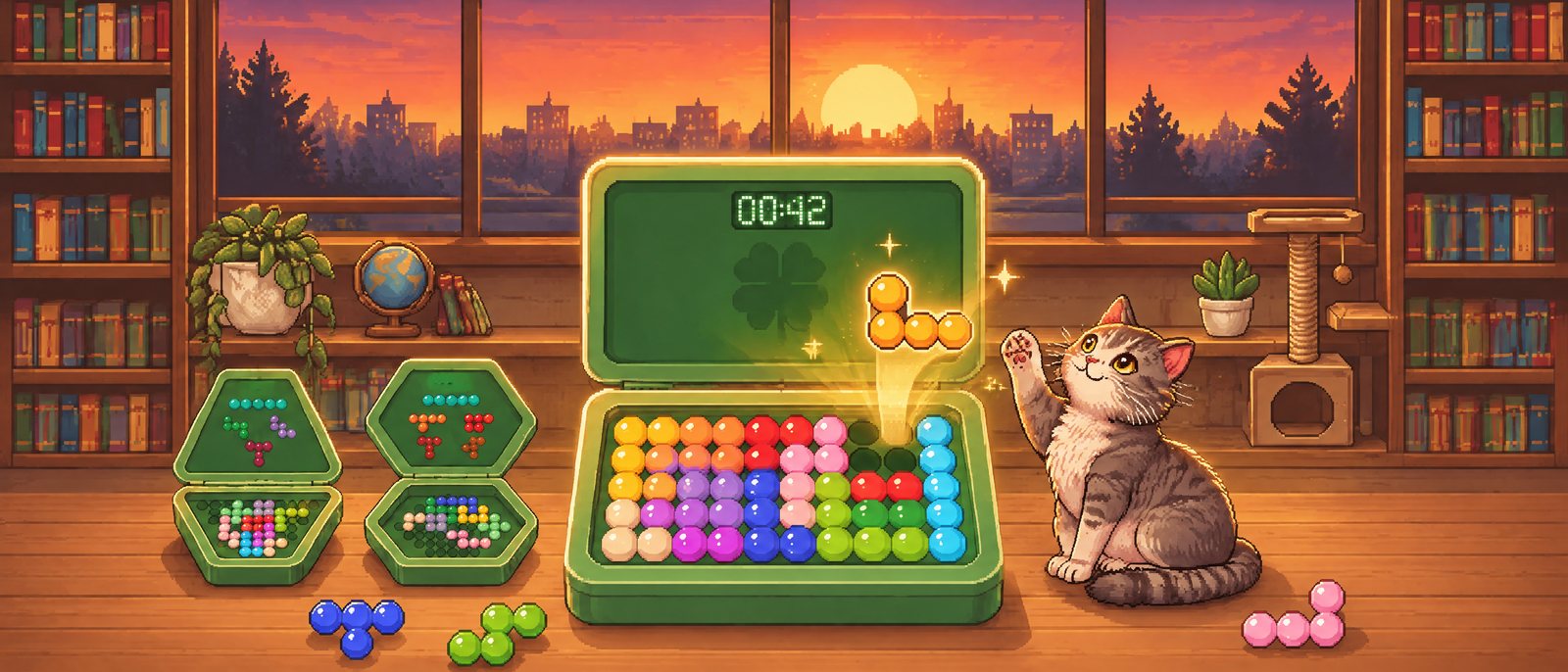
Kanoodle-style puzzles look simple: a handful of pieces made of fused balls, and a board with exactly enough holes. Then you reach the last two pieces and nothing fits. These habits work on the physical puzzle and on Clover Case alike.
1Fill the tightest spot first
Don't start in the open middle. Find the corner, channel or pocket where only one or two pieces could ever fit, and solve that first. Open space is easy to fill later. Tight space only gets tighter.
2Place the awkward pieces early
The long 5-ball line and the zig-zags need room. Leave them for the end and there won't be any. Keep the small compact pieces (the 3-ball corner especially) as flexible filler.
3Count the holes in every closed region
The single best trick. Whenever a placement cuts the board into separate areas, count the empty holes in each one. A 2-hole region can never be filled if your smallest piece has 3 balls, so undo right away. A 7-hole region needs pieces that add up to exactly 7 (3+4).
4Hug the walls
Pieces flat against an edge waste nothing. Pieces floating in the middle leave single-hole gaps around them, and those gaps are the classic dead end.
5Flip, don't just rotate
Most pieces have up to eight orientations: four rotations, then the same four flipped. Players forget to flip far more often than to rotate. If a piece "almost" fits, flip it.
6Use checkerboard parity
Picture the board coloured like a chessboard. Most pieces cover a balanced mix, but some (like the T) always cover 3 of one colour and 1 of the other. If the leftover area is badly unbalanced, your pieces can't fill it however you turn them.
7Work backwards from the last hole
Three pieces left? Look at the emptiest corner and ask which piece could possibly fill it. Often only one can, and that decides the rest.
8Undo early, not late
When the board goes bad, it's rarely your last move. It's the one three moves earlier that made an unfillable pocket. Back up further than feels necessary.
Practise on harder boards
Non-rectangular boards are the best training. A triangle has sharp corners that punish lazy placement; a hexagon has no long wall to lean on, so you rely on hole counting. Clover Case has both, plus a daily puzzle on an empty board, the purest test of everything above.
- 160 handmade levels
- Real ball pieces
- Rotate & flip
- Rectangle, triangle & hexagon boards
- Daily puzzle + leaderboard
- Offline
- Free · 4+
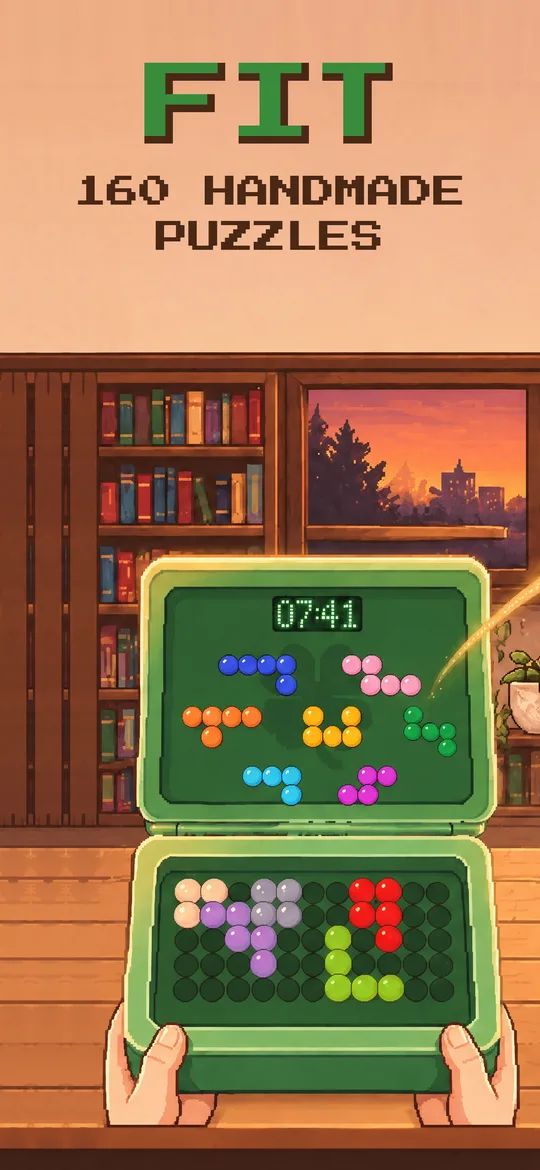
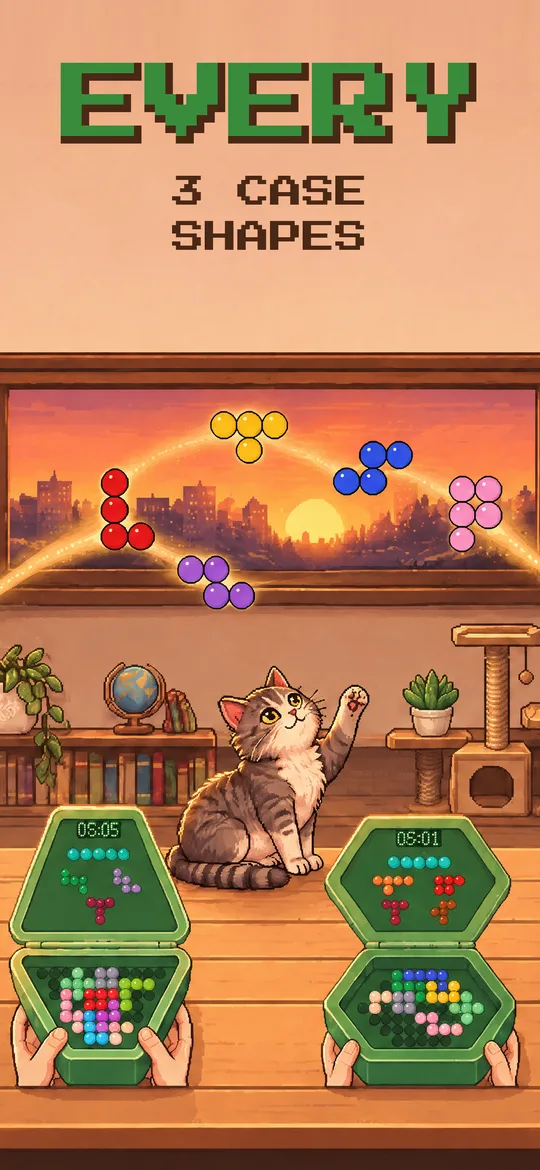
Still stuck? Use the free online Kanoodle solver: copy the starting pieces from your card and it fills in the rest.
FAQ
What is the best first move in Kanoodle?
Start with the most constrained spot, usually a corner or a narrow pocket next to the starter pieces, and fill it with the most awkward piece that can go there.
How do I know a Kanoodle board is a dead end?
Count the empty holes in every closed-off region. If a region has fewer holes than your smallest piece, or a count no combination of your remaining pieces can make, undo your last move.
Are all Kanoodle puzzles solvable?
The official puzzles are. In apps it depends on the developer. Clover Case only ships levels its solver has already completed.